

When a child suffers a dental injury or severe pain in Quincy, MA, parents need immediate, specialized care. Smileland Pediatric Dentistry offers dedicated emergency services at its Quincy location, providing rapid assessment and treatment for children. This guide explains how to find, verify, and navigate emergency pediatric dental care in the area, ensuring your child receives the right help quickly.
How to Choose the Right Provider
Selecting an emergency provider requires looking beyond proximity. A pediatric dentist is a specialist who has completed additional years of training specifically in treating children. This specialized education equips them to handle the unique anatomical and behavioral challenges of young patients. In Quincy, MA, parents should prioritize practices that explicitly list emergency services for children, not just general adult care.
Specialized Training Matters
General dentists are excellent for adults, but children require a different approach. Pediatric dentists are trained in growth and development, behavior management, and the specific types of injuries common in active kids. When choosing a provider, verify that the doctor holds a board certification in pediatric dentistry. This ensures they have met rigorous standards of care specifically for your child's age group.
Availability and Accessibility
Emergency care is only useful if you can actually get in. Look for practices that offer same-day appointments for urgent cases. Smileland Pediatric Dentistry in Quincy is designed to accommodate urgent needs, with a team trained to triage and treat dental emergencies efficiently. Check the office hours and whether they accept walk-ins or require a phone call to secure a slot.
Key Questions to Ask
Before committing to a provider, ask specific questions to ensure they can handle your child's situation. These questions help you gauge the practice's readiness and your insurance compatibility.
- Do you see pediatric emergencies? Confirm they treat children, not just adults.
- What are your emergency hours? Ask if they see patients after standard business hours or on weekends.
- Do you accept my insurance? Verify if they are in-network with your specific plan, such as MassHealth or commercial providers.
- What is the protocol for a knocked-out tooth? This tests their familiarity with urgent trauma protocols.
Verifying Credentials and Claims
It is crucial to verify that a provider's claims are legitimate. You can check a dentist's license and board certification through the Massachusetts Board of Registration in Medicine and Dentistry. This public database confirms that the doctor is licensed to practice and lists any disciplinary actions. Additionally, look for membership in the American Academy of Pediatric Dentistry (AAPD), which indicates a commitment to continuing education and ethical standards in pediatric care.
The Emergency Visit Process
Understanding the workflow reduces anxiety for both parent and child. The process typically follows a structured sequence designed to stabilize the patient and address the immediate issue.
Step 1: Triage and Assessment
Upon arrival, the team will assess the severity of the injury. They will ask about the mechanism of injury, the time it occurred, and any symptoms like pain or swelling. This helps determine the urgency and the appropriate treatment plan.
Step 2: Diagnostic Imaging
Digital X-rays are often taken to visualize the root of the tooth and the surrounding bone. This is critical for injuries that are not visible to the naked eye, such as a fractured root or a dislocated tooth. Digital imaging provides instant results, allowing the dentist to make immediate decisions.
Step 3: Treatment and Stabilization
Understanding Costs and Insurance
Emergency dental care can be expensive, but insurance can help. It is important to distinguish between accepting insurance and being in-network. Accepting insurance means they will file a claim, but you may still owe a higher out-of-pocket cost if they are out-of-network. Being in-network means the provider has a contract with your insurance company, and costs are typically lower and more predictable.
Smileland Pediatric Dentistry accepts MassHealth and most major commercial insurance plans. However, coverage varies by plan. Always call your insurance provider to confirm your specific benefits for emergency services before visiting. Some plans cover emergency visits at a higher percentage than routine cleanings, while others may have specific deductibles that apply.
Common Mistakes to Avoid
Parents often make critical errors in the first minutes after an injury. Avoid these common pitfalls to improve the outcome for your child.
- Throwing away a knocked-out tooth: Never discard a tooth. Keep it moist and bring it to the dentist.
- Waiting too long: Time is critical for re-implantation. Delay reduces the chance of saving the tooth.
- Using the wrong storage medium: Do not store a tooth in water or alcohol. Use milk or saliva.
- Ignoring swelling: Swelling can indicate a serious infection that requires immediate antibiotics.
Pediatric Dentist vs. General Dentist
While general dentists can handle some emergencies, pediatric dentists offer specialized advantages. The table below highlights the key differences.
| Feature | Pediatric Dentist | General Dentist |
|---|---|---|
| Training Focus | Specialized in child development and behavior | General adult and family care |
| Behavior Management | Expert in calming anxious children | May have less experience with pediatric anxiety |
| Equipment | Child-sized instruments and friendly office design | Standard adult-sized equipment |
| Emergency Protocols | Specific protocols for primary and permanent teeth | General trauma protocols |
Handling Specific Injury Types
Different injuries require different immediate actions. Knowing how to handle specific scenarios can make a significant difference.
Knocked-Out Tooth (Avulsion)
If a permanent tooth is knocked out, pick it up by the crown (the part that shows in the mouth), not the root. Rinse it gently if dirty, but do not scrub. Place it back in the socket if possible, or store it in milk. Get to the dentist within 30 minutes for the best chance of re-implantation.
Chipped or Fractured Tooth
Save any broken pieces and bring them to the dentist. They may be able to bond the piece back onto the tooth. Avoid hot or cold foods that might cause sensitivity.
Severe Toothache or Abscess
If your child has severe pain, swelling, or fever, it may indicate an abscess. This is a serious infection that requires prompt treatment, often including antibiotics and drainage. Do not wait for the pain to subside on its own.
Legal and Safety Protections
Patient safety is governed by strict regulations. In Massachusetts, dental practices must adhere to state health and safety codes. This includes proper sterilization of instruments and safe handling of materials. Parents have the right to informed consent, meaning the dentist must explain the procedure, risks, and alternatives before treatment. For minors, a parent or legal guardian must provide this consent.
Quincy and Local Area Details
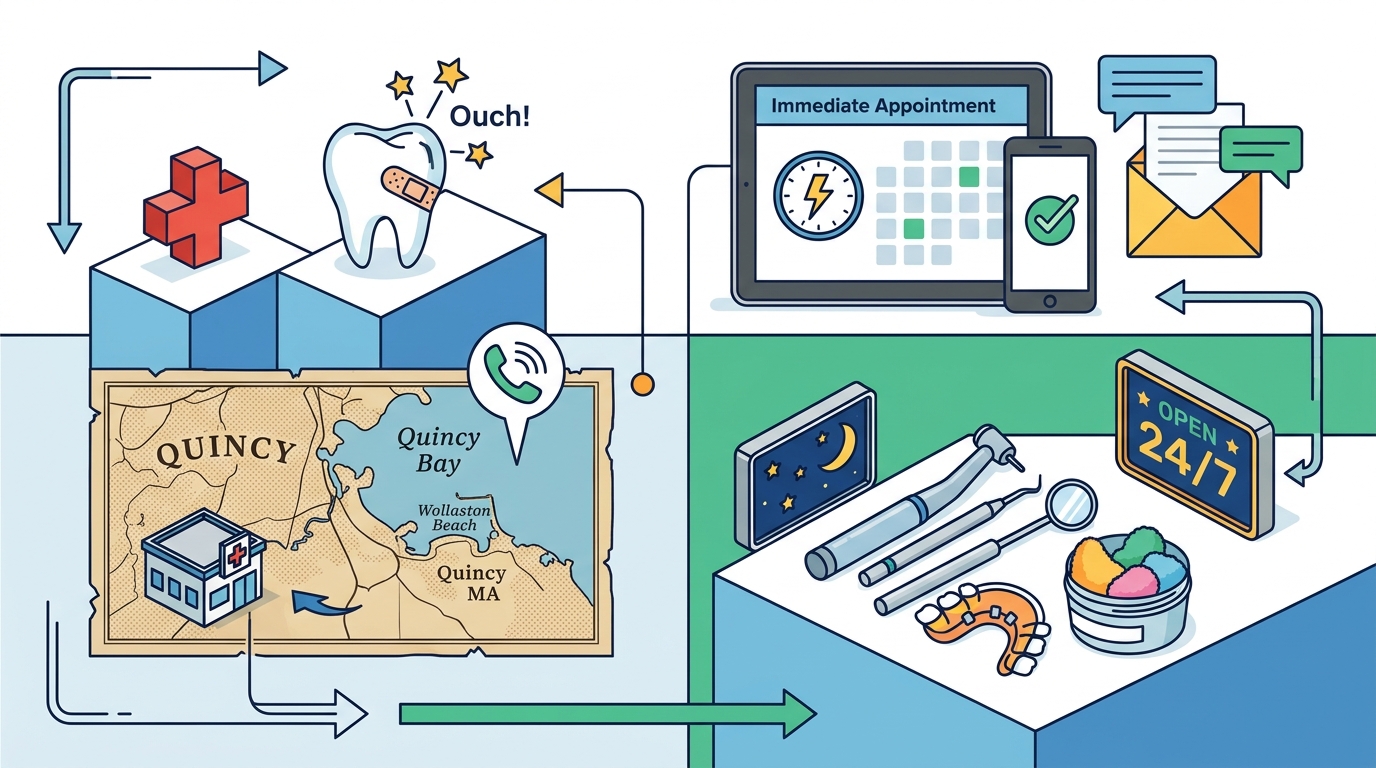
Quincy, MA, is home to several dental practices, but not all specialize in pediatric emergencies. Smileland Pediatric Dentistry has a dedicated office in Quincy, located at 157 Washington St. This location is convenient for families in Quincy and surrounding areas like Braintree and Weymouth. The office is open Monday through Friday, with specific hours that may vary by day. It is advisable to call ahead to confirm availability for emergency slots.
The Importance of Timing
In dental emergencies, time is the most critical factor. The sooner you seek care, the better the outcome. For a knocked-out tooth, the window for successful re-implantation is narrow. For infections, early treatment prevents the spread of bacteria. Do not wait until the pain becomes unbearable. Act quickly to preserve your child's tooth and overall health.
Long-Term Outcomes
Successful emergency treatment sets the stage for long-term oral health. Preserving a primary tooth, for example, maintains space for the permanent tooth to erupt correctly. This prevents future orthodontic issues. Regular follow-up visits ensure that the treated tooth heals properly and that no complications arise. A positive experience during an emergency can also build trust, making future routine visits easier for your child.
Key Takeaways
- Choose a board-certified pediatric dentist for specialized care.
- Verify insurance in-network status before visiting.
- Act quickly; time is critical for saving teeth.
- Store knocked-out teeth in milk, not water.
- Smileland Pediatric Dentistry in Quincy offers dedicated emergency services.
- Understand the difference between accepting insurance and being in-network.
- Follow-up care is essential for long-term success.
Frequently Asked Questions
Does Smileland Pediatric Dentistry in Quincy see emergency patients?
Yes, Smileland Pediatric Dentistry offers emergency services at its Quincy location. They are trained to handle a wide range of pediatric dental emergencies, from injuries to infections.
What should I do if my child knocks out a tooth?
Pick up the tooth by the crown, rinse it gently if dirty, and place it back in the socket or store it in milk. Get to the dentist within 30 minutes for the best chance of re-implantation.
Do you accept MassHealth insurance?
Yes, Smileland Pediatric Dentistry accepts MassHealth and most major commercial insurance plans. Always verify your specific benefits with your insurance provider.
How much does an emergency visit cost?
Costs vary depending on the treatment required and your insurance coverage. Being in-network with your provider typically results in lower out-of-pocket costs.
Can I bring my child to a general dentist for an emergency?
While general dentists can handle some emergencies, a pediatric dentist is specialized in treating children and may offer a more comfortable and effective experience.
What are the office hours for the Quincy location?
The Quincy office is open Monday through Friday. Hours may vary by day, so it is best to call the office to confirm availability for emergency appointments.
Conclusion
When your child faces a dental emergency in Quincy, MA, acting quickly and choosing the right provider is essential. Smileland Pediatric Dentistry is committed to providing compassionate, specialized care for children in urgent situations. By understanding the process, verifying credentials, and knowing the specific steps for different injuries, you can help ensure the best possible outcome for your child. For immediate assistance, contact the Quincy office to schedule an emergency appointment.