

Choosing the right pediatric dentist in Quincy, MA, requires balancing board certification, office accessibility, and a child-friendly environment. Smileland Pediatric Dentistry offers specialized care in Quincy, helping families establish lifelong oral health habits through gentle, age-appropriate treatments. This guide covers how to evaluate local providers, verify credentials, understand costs, and navigate the specific dental landscape of the Quincy and greater Boston area.
How to Choose a Pediatric Dentist
Selecting a provider involves more than checking a directory. A pediatric dentist is a general dentist who has completed an additional two to three years of specialized training after dental school, focusing on the growth and development of children. This extra education equips them to handle behavioral management, developmental issues, and specific pediatric conditions that general dentists may not address daily. according to How long does
Credentials and Specialization
Look for board certification. In the United States, the American Board of Pediatric Dentistry (ABPD) certifies specialists who have met rigorous standards. While not every pediatric dentist is board-certified, certification indicates a high level of expertise. At Smileland, our clinical director, Dr. Amir Yavari, is a Board-Certified Pediatric Dentist with extensive training at NYU Langone Dental Medicine.
Environment and Approach
The office atmosphere significantly impacts a child's experience. A good pediatric practice designs its space to be welcoming, with age-appropriate decorations and a calm demeanor from the staff. The team should be skilled in explaining procedures in simple, non-threatening language. Parents should observe how the staff interacts with children during the initial consultation to gauge their comfort level.
Questions to Ask Before Committing
Before booking a routine appointment, ask specific questions to ensure the practice aligns with your family's needs. These inquiries help clarify the provider's philosophy, logistics, and emergency protocols.
- What is your approach to anxious children? Ask about behavioral management techniques and whether they offer sedation options.
- What are your office hours? Check if the schedule fits your work or school day. Smileland's Quincy office is open Monday through Friday, with specific hours listed on their Quincy location page.
- Do you accept my insurance? Clarify if the practice is in-network with your specific plan, such as MassHealth or commercial providers.
- How do you handle dental emergencies? Understand the protocol for urgent care outside of regular hours.
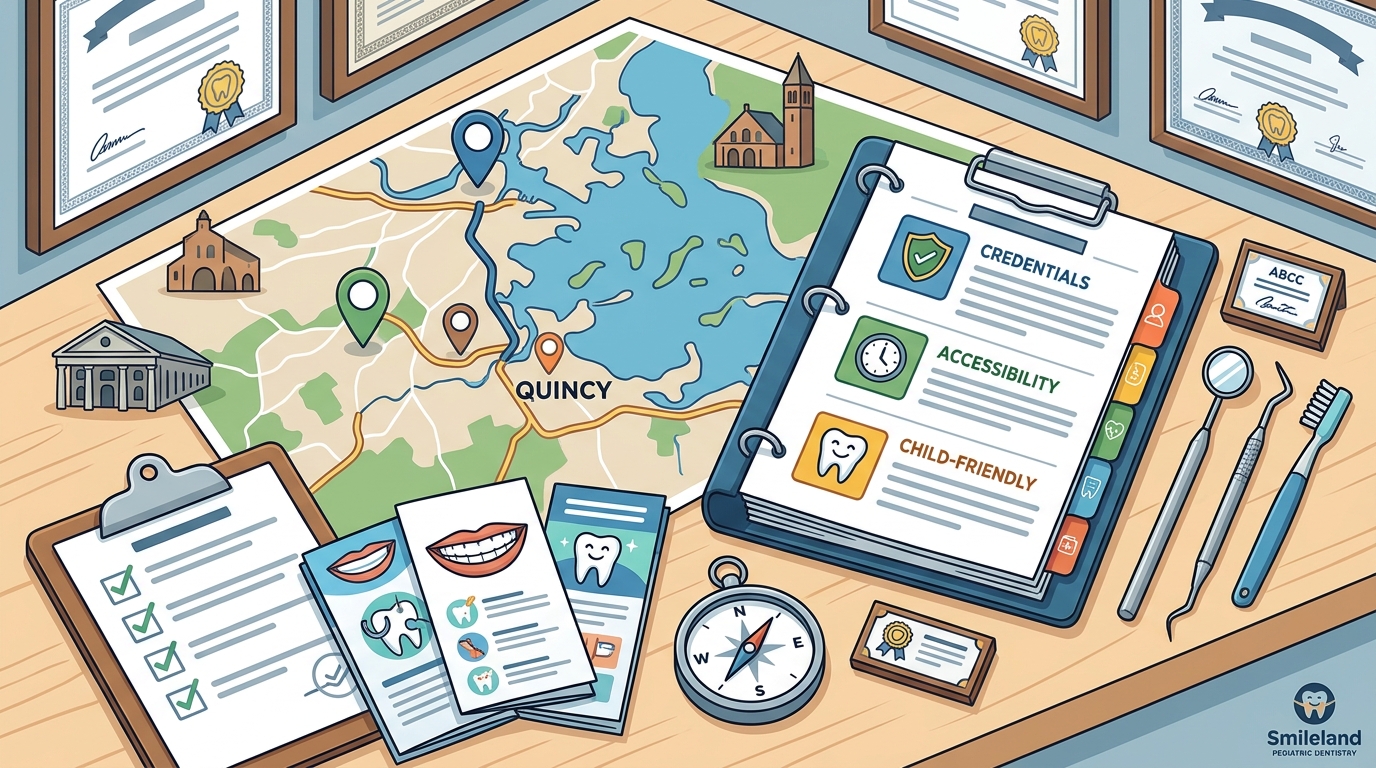
Verifying Credentials and Claims
It is essential to verify that a dentist's claimed credentials are legitimate. You can check the American Dental Association (ADA) directory or the state dental board website to confirm active licensure. For board certification, the ABPD maintains a public directory of certified specialists. Additionally, check the practice's website for the specific degrees and training institutions of the providers. Transparency in a practice's about page is a strong indicator of professionalism.
The Routine Visit Process
A routine pediatric dental exam is designed to be a positive experience. The process typically follows a structured sequence to minimize anxiety and maximize efficiency.
Initial Assessment
The visit begins with a review of medical and dental history. The dentist will ask about any pain, sensitivity, or concerns. This is followed by a visual examination of the teeth, gums, and jaw development.
Cleaning and Fluoride
A dental hygienist performs a gentle cleaning to remove plaque and tartar. Following the cleaning, a fluoride varnish is often applied. Fluoride varnish is a topically applied product that strengthens tooth enamel and helps prevent decay. This procedure is painless and takes only a few minutes.
Education and Next Steps
The dentist will review the findings with you and your child. They may take digital X-rays if necessary to check for issues between teeth or below the gumline. The visit concludes with a plan for the next appointment, usually scheduled six months later.
Understanding Dental Costs
Dental costs vary based on the type of treatment, the provider's fees, and insurance coverage. Routine exams and cleanings are generally the most affordable components of dental care. However, costs can increase if restorative treatments, such as fillings or crowns, are needed.
Insurance and Out-of-Pocket Expenses
Most dental insurance plans cover preventive care, including exams, cleanings, and X-rays, at a high percentage. Restorative care is often covered at a lower percentage. It is crucial to understand your plan's deductible and annual maximum. Smileland accepts most major insurance plans and MassHealth, but you are responsible for any balance not covered by insurance. We file claims electronically to streamline the process for you.
Common Mistakes to Avoid
Parents often make errors that can complicate their child's dental care. Avoid waiting until a tooth hurts to schedule a visit. Delaying care allows small issues to become large problems. Another common mistake is not preparing the child for the visit. Using negative words like "drill" or "shot" can create fear. Instead, use positive language and explain that the dentist is there to help keep their smile healthy.
Pediatric vs. General Dentistry
While general dentists can treat children, pediatric dentists offer specialized care. The table below highlights the key differences.
| Feature | Pediatric Dentist | General Dentist |
|---|---|---|
| Specialized Training | 2-3 years additional residency | 4 years dental school |
| Behavioral Management | Expert in child psychology and anxiety | Basic training in patient management |
| Office Environment | Child-friendly design and toys | Standard adult-oriented design |
| Focus | Growth, development, and prevention | Comprehensive care for all ages |
Care for Special Needs and Anxiety
Children with special needs or severe dental anxiety require tailored approaches. Pediatric dentists are trained to accommodate various disabilities and medical conditions. At Smileland, we work with families to create a comfortable experience, including using specific equipment or restraints if necessary. For children who cannot sit still or have a strong gag reflex, sedation options may be considered. Sedation dentistry is a method of administering medication to help patients relax during dental procedures. The level of sedation, from nitrous oxide to general anesthesia, is chosen based on the child's specific needs and the complexity of the treatment.
Regulations and Patient Rights
Dental practices must adhere to strict safety and privacy regulations. The Health Insurance Portability and Accountability Act (HIPAA) protects patient health information. Practices must also follow infection control standards set by the Centers for Disease Control and Prevention (CDC). Parents have the right to informed consent, meaning they must understand the proposed treatment, risks, and alternatives before it begins. You also have the right to access your child's dental records and request corrections if necessary.
Quincy and Local Specifics
Quincy, MA, offers several options for pediatric dental care. The city's proximity to Boston provides access to a wide range of specialists. When choosing a local provider, consider the office's location relative to your home or school. Smileland's Quincy office is located at 157 Washington St, making it convenient for families in the area. The office is open Monday through Friday, with hours that accommodate after-school schedules. Local familiarity with the community can also be a benefit, as providers may be more aware of local water fluoridation levels and dietary habits.
Timing Your Child's First Visit
The American Academy of Pediatric Dentistry recommends that children have their first dental visit by their first birthday or within six months of the first tooth erupting. Early visits help establish a "dental home" and allow the dentist to monitor development. Waiting until a problem arises can lead to more complex and costly treatments. Scheduling regular checkups every six months ensures that any issues are caught early. For new patients, Smileland offers a gentle first visit experience designed to build trust and confidence.
Long-Term Oral Health Outcomes
Consistent pediatric dental care leads to better long-term oral health outcomes. Children who establish a routine with a pediatric dentist are more likely to maintain good oral hygiene habits into adulthood. Regular preventive care, including fluoride treatments and sealants, significantly reduces the risk of cavities. Sealants are protective coatings applied to the chewing surfaces of back teeth, reducing the risk of decay by approximately 80%. By focusing on prevention and education, pediatric dentists help ensure that children grow up with healthy, functional smiles.
Key Takeaways
- Choose a board-certified pediatric dentist with specialized training in child care.
- Verify credentials through the ADA or state dental board directories.
- Ask about the office's approach to anxiety and emergency protocols.
- Understand your insurance coverage and out-of-pocket costs before treatment.
- Schedule the first visit by age one to establish a dental home.
- Use positive language to prepare your child for dental visits.
- Consider sedation options for children with severe anxiety or special needs.
- Maintain a routine of checkups every six months for long-term health.
Frequently Asked Questions
What is the difference between a pediatric dentist and a general dentist?
A pediatric dentist has completed additional specialized training in treating children, focusing on growth, development, and behavioral management. General dentists treat patients of all ages but may not have the same level of expertise in pediatric care. according to How long does
When should my child have their first dental visit?
The first visit should occur by the child's first birthday or within six months of the first tooth erupting. This early visit helps establish a dental home and monitor development.
Does Smileland accept MassHealth?
Yes, Smileland accepts MassHealth and most major commercial insurance plans. You are responsible for any balance not covered by your insurance.
What is sedation dentistry?
Sedation dentistry involves administering medication to help patients relax during dental procedures. Options range from nitrous oxide to general anesthesia, chosen based on the child's needs.
How often should my child see the dentist?
Most children should see the dentist every six months for routine exams and cleanings. The dentist may recommend more frequent visits if there are specific health concerns.
What should I do if my child has a dental emergency?
Contact the dental office immediately. If the emergency involves severe swelling, difficulty breathing, or a serious injury, call 911 or go to the nearest emergency room.
Ready to Start Your Child's Dental Journey?
Choosing the right pediatric dentist is a significant step toward lifelong oral health. Smileland Pediatric Dentistry in Quincy is dedicated to providing compassionate, specialized care for your child. Our team is ready to welcome your family and help you establish a positive relationship with dental care. To schedule an appointment or learn more about our services, please contact our office today.