

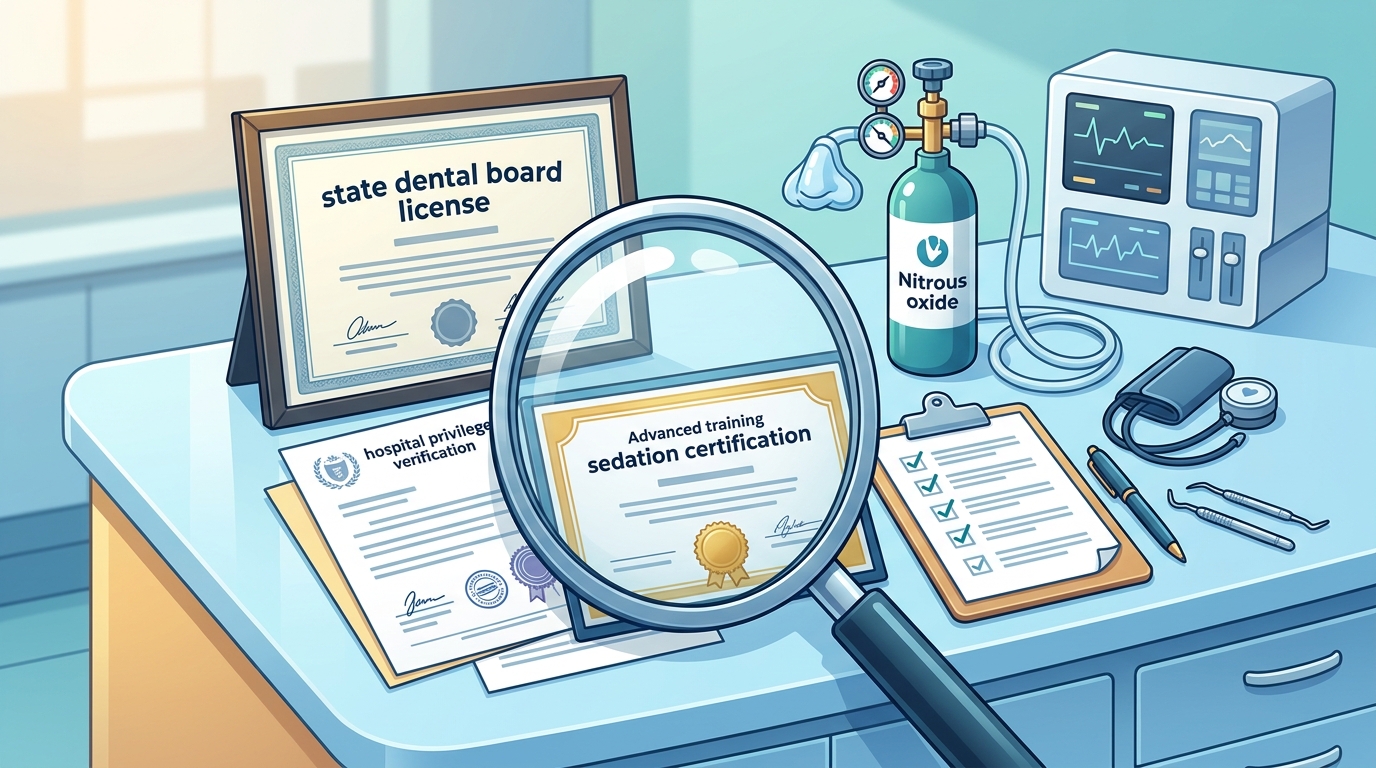
Verifying a pediatric dentist's sedation credentials requires checking state dental board licenses, hospital privileges, and specific advanced training certifications. Parents should confirm that the provider holds a valid license for their specific sedation method, such as general anesthesia, and verify their standing with local hospital systems. This due diligence ensures your child receives care from a qualified specialist in a safe environment.
State Dental Board Licensing
The foundation of any dental credential is a valid state license. In Massachusetts, the Board of Registration of Dental Examiners oversees the practice of dentistry. A dentist must hold an active license to perform any procedure, including sedation. You can verify a provider's license status through the state's official online portal. This database confirms whether the license is active, expired, or suspended. It also lists any disciplinary actions or restrictions placed on the provider's practice. A legitimate sedation provider will have a clean record in this public registry.
Hospital Privileges and Anesthesia
General anesthesia requires a specific level of oversight and facility standards. Many pediatric dentists who offer general anesthesia do so in hospital settings or accredited ambulatory surgical centers. These providers must hold hospital privileges, which are granted after a rigorous review of their training and experience. You can ask the practice directly if their provider has active privileges at a local hospital. This status indicates that the hospital has vetted the dentist's competence for high-risk procedures. It is a strong indicator of legitimacy for complex sedation cases.
Specialty Training and Certification
Board certification in pediatric dentistry is a significant marker of expertise. The American Board of Pediatric Dentistry (ABPD) certifies dentists who have completed advanced residency training. While not all pediatric dentists are board-certified, those who are have passed rigorous examinations. You can verify board certification through the ABPD's online directory. This certification demonstrates a high level of knowledge in managing children's dental and medical needs. It is particularly relevant for providers who manage sedation in complex cases.
Sedation-Specific Training
Specific sedation methods require specific training. Nitrous oxide, oral sedation, and IV sedation each have different training requirements. Providers should be able to document their training in these specific modalities. For example, IV sedation requires specific coursework and clinical hours. You can ask the provider to share their certificates of completion for sedation training. This transparency is a hallmark of a legitimate practice. It shows that the provider is committed to ongoing education and safety.
Smileland's Approach to Verification
At Smileland Pediatric Dentistry, we prioritize transparency in our credentials. Our team includes board-certified pediatric dentists with extensive training in sedation and general anesthesia. We hold hospital privileges for complex cases and maintain active licenses in Massachusetts. We encourage parents to ask questions about our providers' qualifications. Our goal is to build trust through open communication and verified expertise. We serve families in Quincy, Roslindale, Malden, and Westborough with a focus on safety and comfort.
Key Takeaways
- Check the state dental board license to confirm active status and disciplinary history.
- Verify hospital privileges for providers who perform general anesthesia.
- Look for board certification in pediatric dentistry through the ABPD directory.
- Ask for documentation of specific sedation training, such as IV or nitrous oxide.
- Choose a practice that is transparent about their providers' qualifications.
- Smileland Pediatric Dentistry offers verified credentials and hospital privileges for complex care.
Frequently Asked Questions
How do I check if a dentist is licensed in Massachusetts?
You can search the Massachusetts Board of Registration of Dental Examiners online database. This free tool allows you to verify a dentist's license status and any disciplinary actions.
What is the difference between a license and board certification?
A license is required by law to practice dentistry. Board certification is a voluntary credential that demonstrates advanced training and expertise in a specialty field.
Do all pediatric dentists have hospital privileges?
No, not all pediatric dentists have hospital privileges. These privileges are typically held by providers who perform general anesthesia in hospital settings.
Where can I verify board certification in pediatric dentistry?
You can verify board certification through the American Board of Pediatric Dentistry (ABPD) online directory. This directory lists all certified pediatric dentists in the United States.
Is sedation training required for all dentists?
Basic sedation training is part of dental school, but advanced sedation methods like IV sedation require additional specific training and certification.
Conclusion
Verifying sedation credentials is a critical step in ensuring your child's safety. By checking state licenses, hospital privileges, and board certifications, you can make an informed decision about your child's care. Smileland Pediatric Dentistry is committed to transparency and excellence in pediatric dental care. We invite you to learn more about our team and services at our locations in Quincy, Roslindale, Malden, and Westborough. Meet our specialists to see their verified credentials and experience.