

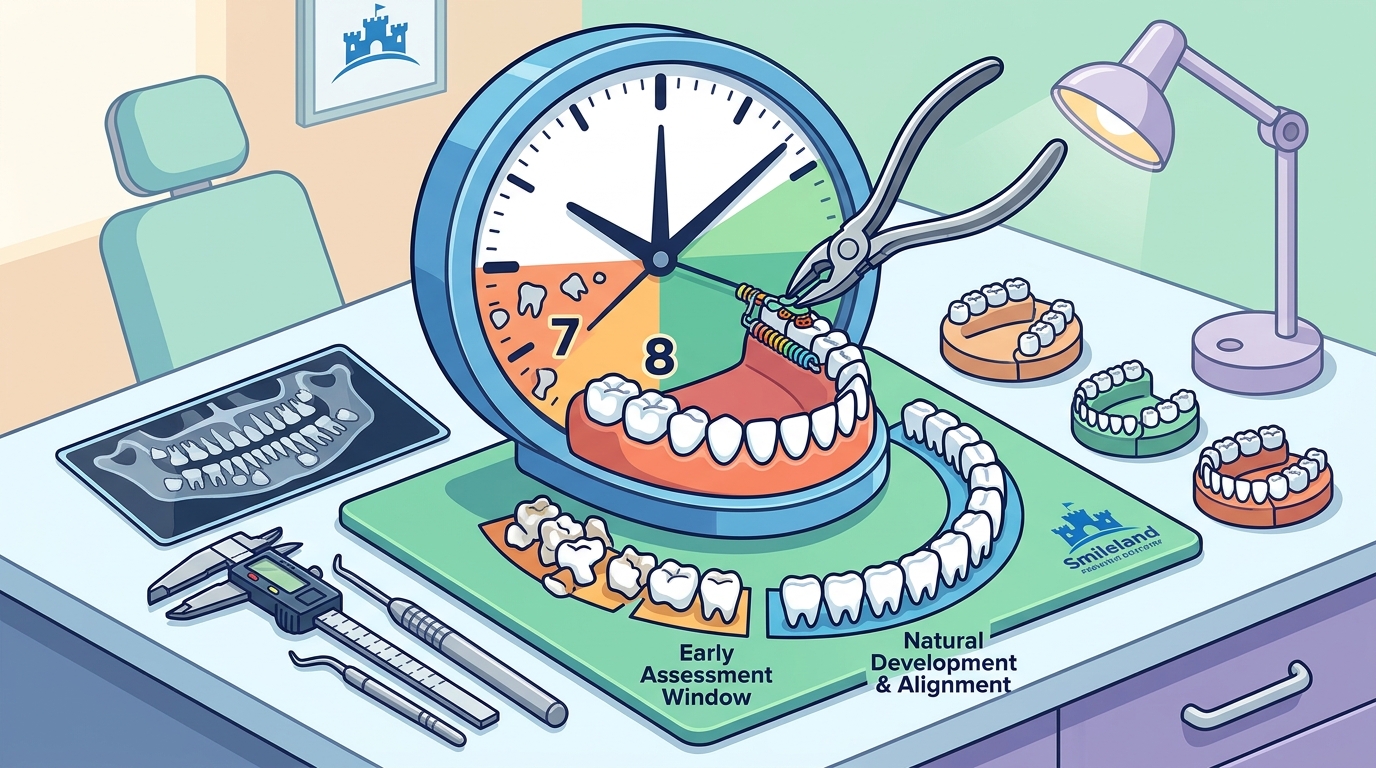
Parents should schedule a child's first orthodontic evaluation between ages 7 and 8. This timing allows a specialist to assess jaw growth and tooth eruption before major alignment issues become difficult to correct. At Smileland Pediatric Dentistry, our team helps families identify the right moment for this critical checkup. Early evaluation ensures that any necessary interventions are timed to work with your child's natural development.
Why Age Seven Matters for Jaw Development
By age seven, most children have lost their first four baby molars and have their first permanent molars in place. This stage is known as the mixed dentition phase. It is the ideal window to evaluate how the upper and lower jaws are growing relative to each other. An orthodontic evaluation is a professional assessment of tooth alignment and jaw growth. During this phase, the jaw is still developing, which makes it easier to guide growth rather than just moving teeth. If a jaw discrepancy is detected early, simple appliances can be used to create space or correct the bite. Waiting until all baby teeth are gone often means the jaw has stopped growing, limiting treatment options.
Signs That Your Child May Need Early Attention
While age seven is the standard recommendation, certain signs may warrant an earlier visit. Thumb sucking or pacifier use beyond age four can affect the shape of the palate. Crossbites, where the upper teeth bite inside the lower teeth, are another indicator. A crossbite is a malocclusion where the upper teeth overlap the lower teeth on one or both sides. If you notice your child's front teeth protruding significantly or their jaw shifting to one side when they bite down, an evaluation is advisable. These issues can lead to uneven wear on the teeth and jaw pain. Early intervention can prevent these problems from worsening as the permanent teeth erupt.
What Happens During the Evaluation
A first orthodontic evaluation is a non-invasive process designed to assess your child's dental development. The specialist will take a detailed medical and dental history. They will examine the teeth, gums, and jaw alignment. Digital X-rays are often used to look at the developing teeth beneath the gums. Digital X-rays provide low-radiation images that help track growth. The doctor will check for crowding, spacing, and the relationship between the upper and lower jaws. Based on these findings, they will recommend one of three paths: immediate treatment, monitoring, or no treatment needed. Most children at this age do not need braces immediately. Instead, the doctor may recommend monitoring the growth at regular intervals.
Benefits of Early Orthodontic Intervention
Early orthodontic care, often called Phase 1 treatment, can simplify later treatment. By guiding jaw growth, the specialist can create space for crowded permanent teeth. This may reduce the need for tooth extractions in the future. It can also improve the function of the bite, making it easier for the child to chew and speak. Children who receive early intervention often have shorter Phase 2 treatment times. This means they spend less time wearing braces overall. The psychological benefit is also significant. Correcting alignment early can boost a child's confidence before they enter the socially sensitive teenage years. At Smileland, we focus on creating a positive experience that encourages lifelong oral health habits.
Finding the Right Specialist in Massachusetts
Choosing a pediatric orthodontist requires looking for a provider who understands child development. A general dentist can refer you, but a specialist has additional training in orthodontics. Smileland's orthodontic services are tailored specifically for children and adolescents. Our offices in Quincy, Roslindale, Malden, and Westborough offer convenient access for families across the region. We accept most major insurance plans and MassHealth, making specialized care accessible. When selecting a provider, look for a team that communicates clearly and involves the child in the process. A comfortable environment helps reduce anxiety and ensures the child cooperates during the exam.
Key Takeaways
- Schedule the first orthodontic evaluation between ages 7 and 8.
- Early evaluation allows the specialist to monitor jaw growth and tooth eruption.
- Signs like crossbites or persistent thumb sucking may require earlier attention.
- Most children do not need braces immediately after the first evaluation.
- Early intervention can simplify future treatment and reduce the need for extractions.
- Choose a pediatric specialist who offers a child-friendly environment.
Frequently Asked Questions
Is it too late to start orthodontic evaluation after age 8?
No, it is never too late. While age 7 is the recommended starting point, evaluations at any age can identify issues that need correction. Later evaluations may require different treatment approaches, but they are still effective.
Does my child need braces if they have a perfect smile?
Not necessarily. A perfect smile does not always mean perfect alignment. The evaluation checks for functional issues that may not be visible, such as jaw relationship or hidden crowding. The specialist will determine if treatment is needed.
How long does the first evaluation take?
The initial evaluation typically takes about 30 to 45 minutes. This includes the exam, X-rays, and a discussion of the findings and recommendations with the parents.
Can I use my dental insurance for the evaluation?
Most dental insurance plans cover one orthodontic evaluation per lifetime. Smileland accepts most major plans and MassHealth. You should verify your specific benefits with your insurance provider before the visit.
What is the difference between a pediatric dentist and an orthodontist?
A pediatric dentist focuses on general dental health and prevention. An orthodontist specializes in correcting tooth alignment and jaw growth. Many pediatric dentists, like those at Smileland, also provide orthodontic care for children.
Conclusion
Scheduling your child's first orthodontic evaluation at age seven is a proactive step toward a healthy smile. It allows for early detection of growth issues and ensures that any necessary treatment is timed correctly. At Smileland Pediatric Dentistry, we provide compassionate, specialized care for children and adolescents. Our team is dedicated to helping your child achieve a confident, functional smile. To book an evaluation, schedule an appointment at your nearest location today.