

Where to Get Braces for Your Child in Quincy, MA: A Parent's Guide
Smileland Pediatric Dentistry offers pediatric orthodontics in Quincy, MA, providing comprehensive braces and aligner care for children and adolescents. This guide explains the ideal timing for orthodontic evaluation, the types of braces available, and how to navigate insurance and scheduling. We cover the clinical process, from initial exams to active treatment, helping parents make informed decisions for their child's smile.
Orthodontic Evaluation Timing
Many parents wait until all baby teeth fall out before seeking orthodontic care. This approach can miss critical windows for guiding jaw growth. Early orthodontic evaluation is recommended by the American Association of Orthodontists (AAO) around age seven. At this stage, the permanent front teeth are erupting, allowing the dentist to assess jaw development and tooth alignment. For additional details, review the .
Why Age Seven Matters
Age seven is a pivotal developmental milestone. The permanent incisors are visible, and the jaw is still growing. An evaluation at this age allows the specialist to identify potential issues such as crossbites, crowding, or jaw discrepancies. Early intervention can simplify future treatment or reduce the need for extractions. It does not mean every child needs braces immediately, but it establishes a baseline for monitoring. For additional details, review the Customer Experience.
Signs Your Child May Need Evaluation
While age is a good guideline, specific symptoms warrant an earlier look. Parents should schedule an appointment if they notice: For additional details, review the Frequently Asked Questions.
- Difficulty chewing or biting food. >Mouth breathing or snoring.
- Thumbsucking or tongue thrusting habits persisting past age five.
- Crowding or overlapping teeth.
- Jaw shifting or making sounds when opening and closing the mouth.
Smileland Pediatric Dentistry in Quincy performs these evaluations as part of our comprehensive pediatric care. Our specialists assess growth patterns and recommend a treatment plan tailored to the child's specific needs.
Types of Orthodontic Treatment
Traditional Braces
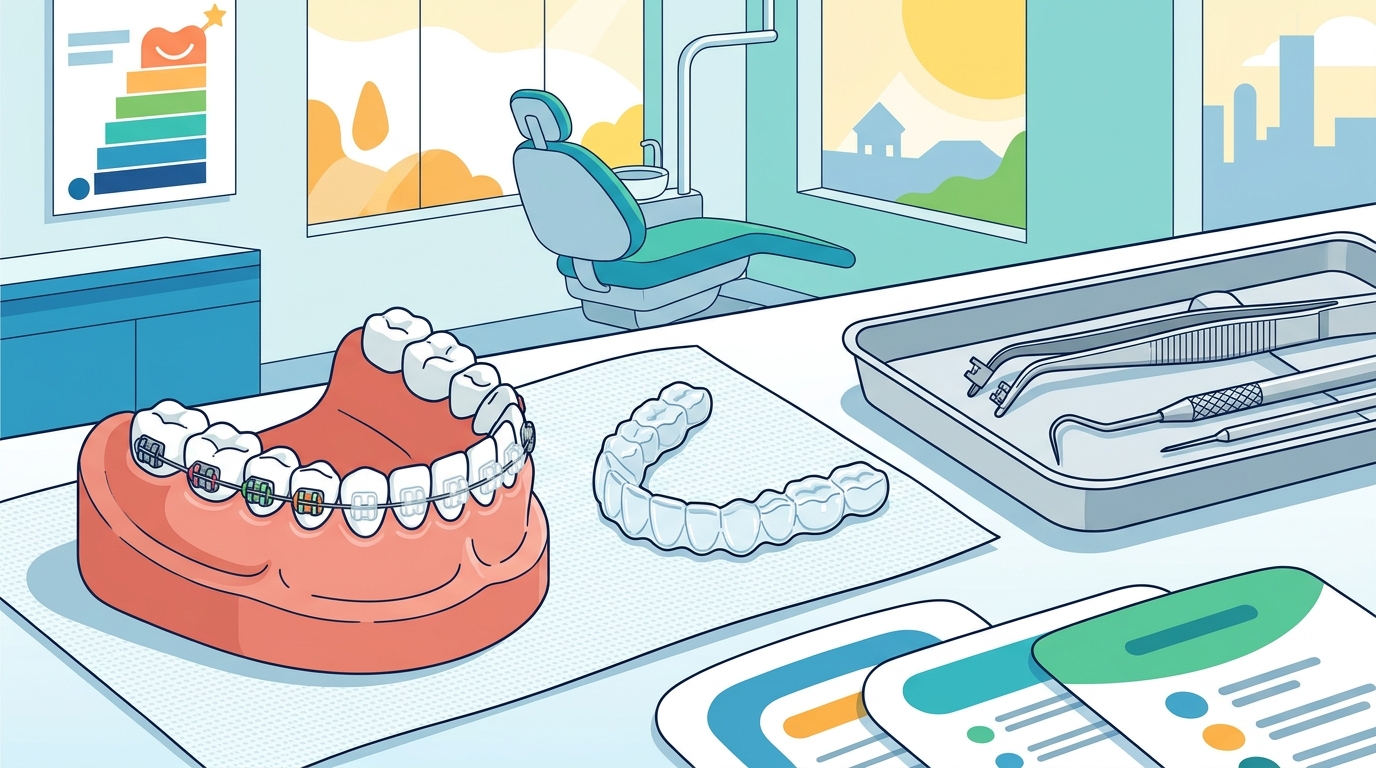
Traditional braces consist of brackets bonded to the teeth and connected by wires. They are highly effective for complex cases involving significant rotation or bite correction. Modern braces use smaller brackets and colored elastics, making them less noticeable than older models. They require diligent oral hygiene and regular adjustments every four to eight weeks.
Clear Aligners
Clear aligners are removable trays that gradually shift teeth into position. They are a popular option for mild to moderate crowding and spacing issues. Aligners are nearly invisible and can be removed for eating and brushing. However, they require high compliance; the child must wear them for 20 to 22 hours a day to be effective.
Interceptive Appliances
Interceptive appliances are used in early treatment to guide jaw growth. Examples include palatal expanders, which widen the upper jaw, and space maintainers, which preserve room for permanent teeth. These devices are often used in conjunction with braces or as standalone treatments to prevent more severe issues later.
| Treatment Type | Best For | Removability | Compliance Requirement |
|---|---|---|---|
| Traditional Braces | Complex bite issues, severe crowding | Fixed | Oral hygiene, dietary restrictions |
| Clear Aligners | Mild to moderate crowding, spacing | Removable | 20-22 hours daily wear |
| Interceptive Appliances | Jaw growth guidance, early intervention | Fixed or Removable | Regular adjustments, hygiene |
Insurance and Financial Planning
Understanding the financial aspect of orthodontics is crucial for planning. Orthodontic insurance coverage is a benefit that helps offset the cost of braces and aligners, but terms vary significantly by plan. Smileland Pediatric Dentistry accepts MassHealth and most major commercial insurance plans. However, accepting a plan does not guarantee full coverage or in-network status for all services.
Verifying Your Benefits
Before starting treatment, parents should contact their insurance provider to confirm specific benefits. Key questions include:
- Is orthodontia covered for the child's age?
- What is the lifetime maximum benefit?
- Is there a deductible or coinsurance?
- Is Smileland in-network for your specific plan?
MassHealth members should verify their specific coverage details, as benefits can vary by county and eligibility category. Our office staff can assist with pre-authorization and claims processing to minimize out-of-pocket surprises.
Payment Options
The Orthodontic Process
Starting orthodontic treatment involves several steps, from initial evaluation to final retention. Understanding this timeline helps set realistic expectations.
Initial Consultation and Exam
The process begins with a comprehensive exam. The orthodontist takes X-rays, photos, and impressions of the teeth. This data is used to diagnose the issue and design a treatment plan. The parent and child review the plan, including estimated duration and costs, before deciding to proceed.
Active Treatment
Once treatment begins, the child visits the office every four to eight weeks for adjustments. During this phase, the teeth gradually move into alignment. Parents play a vital role in ensuring the child maintains good oral hygiene and follows dietary guidelines. For aligner patients, compliance with wear time is critical for progress.
Retention
After braces or aligners are removed, retention is essential to maintain results. Orthodontic retention is the phase where appliances hold teeth in their new positions while the surrounding bone stabilizes. Retainers are typically worn full-time initially, then transitioned to nighttime wear. Lifelong retention is often recommended to prevent relapse.
Key Takeaways
- Schedule an orthodontic evaluation by age seven to monitor jaw growth.
- Early intervention can simplify future treatment and reduce complexity.
- Traditional braces are best for complex cases; aligners suit mild issues.
- Verify insurance benefits and in-network status before starting treatment.
- Smileland Pediatric Dentistry in Quincy accepts MassHealth and major commercial plans.
- Retention is a critical part of the process to maintain long-term results.
- Compliance with hygiene and wear instructions is key to successful treatment.
Frequently Asked Questions
At what age should my child see an orthodontist?
The American Association of Orthodontists recommends an initial evaluation by age seven. This allows the specialist to assess jaw growth and identify potential issues early.
Does Smileland offer braces in Quincy?
Yes, Smileland Pediatric Dentistry provides pediatric orthodontic services, including braces and aligners, at our Quincy location.
Do you accept MassHealth?
Yes, we accept MassHealth and most major commercial insurance plans. Please contact our office to verify specific benefits for your plan.
How long does orthodontic treatment take?
Treatment duration varies by case complexity. Most cases take between 12 and 24 months, but early intervention cases may differ.
Are clear aligners suitable for all children?
Clear aligners are best for mild to moderate crowding and spacing. Complex bite issues often require traditional braces. The orthodontist will recommend the best option after evaluation.
What happens after braces are removed?
After removal, the child must wear retainers to maintain alignment. This retention phase is crucial for long-term stability.
Conclusion
Choosing the right orthodontic care for your child in Quincy, MA, requires understanding timing, treatment options, and financial planning. Smileland Pediatric Dentistry is committed to providing compassionate, specialized care that supports lifelong healthy habits. Our team in Quincy is ready to guide you through every step of the process, from initial evaluation to final retention. To schedule an orthodontic consultation, today and take the first step toward a confident smile.