
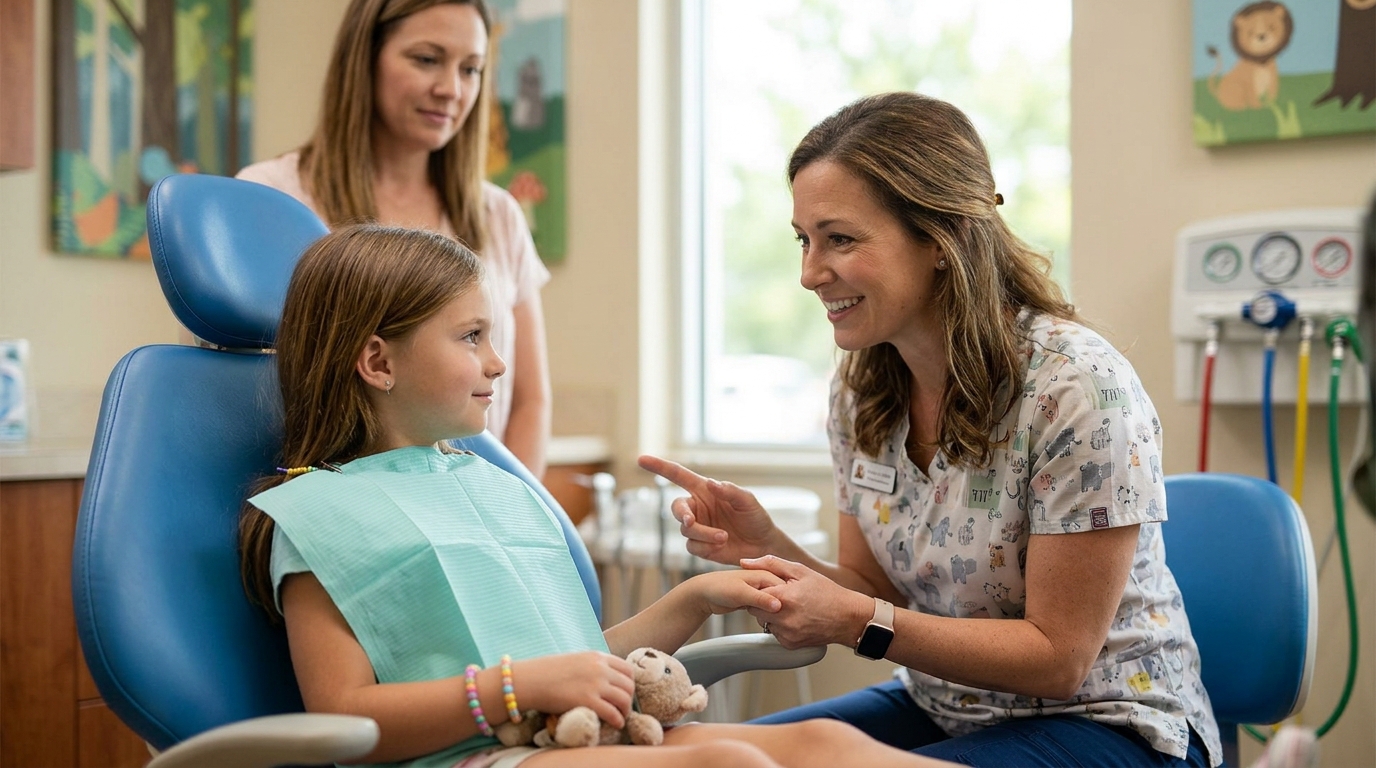
Choosing the right anxiety reduction method depends on your child's specific comfort level and clinical needs. For most children, behavioral techniques and nitrous oxide provide effective, low-risk relief. For those with severe phobia or special needs, deeper sedation or general anesthesia may be necessary. Smileland Pediatric Dentistry offers a full spectrum of these options to ensure every child receives safe, individualized care.
Behavioral Techniques and Tell-Show-Do
Behavioral management is the first line of defense for mild to moderate dental anxiety. This approach relies on communication, distraction, and positive reinforcement rather than medication. The Tell-Show-Do technique is a standard method where the dentist explains a procedure, demonstrates it on a model or finger, and then performs it on the child. This transparency helps demystify the process and reduces the fear of the unknown. Parents are often encouraged to stay in the waiting area to allow the child to build trust with the clinical team. This method is ideal for children who are curious but hesitant, as it empowers them with knowledge and control.
Nitrous Oxide (Laughing Gas)
Nitrous oxide is a mild inhalation sedative that helps children relax while remaining fully conscious and responsive. It is administered through a small mask placed over the nose, and the effects wear off quickly once the gas is replaced with oxygen. This method is particularly useful for children who need to stay still for a short procedure but do not require deep sedation. Because it is non-invasive and has a rapid onset and offset, it is a popular choice for routine cleanings and fillings. At Smileland, our team carefully monitors each patient to ensure the experience is calm and comfortable.
Oral and IV Sedation
For children with moderate to severe anxiety, oral sedatives or intravenous (IV) sedation may be recommended. Oral sedation involves taking a medication by mouth before the appointment, which induces a state of drowsiness. IV sedation is administered through a vein and allows for deeper relaxation, often resulting in the child having little to no memory of the procedure. These methods require a more thorough pre-procedure evaluation to ensure safety. They are suitable for children who have had negative past experiences or who require multiple procedures in a single visit. Our specialists, including those with advanced training in oral and maxillofacial surgery, are equipped to manage these sedation levels safely.
General Anesthesia
General anesthesia is the deepest level of sedation, rendering the child completely unconscious and unresponsive. It is typically reserved for children with extensive dental needs, severe behavioral challenges, or special health care needs that make other methods ineffective. This procedure is performed in a controlled setting, often a hospital or accredited surgical center, where the child is closely monitored by an anesthesiologist. While it carries higher risks than other methods, it allows for comprehensive treatment in a single session. Dr. Amir Yavari, our Clinical Director, has extensive experience performing procedures under general anesthesia and is committed to providing compassionate care in these complex situations.
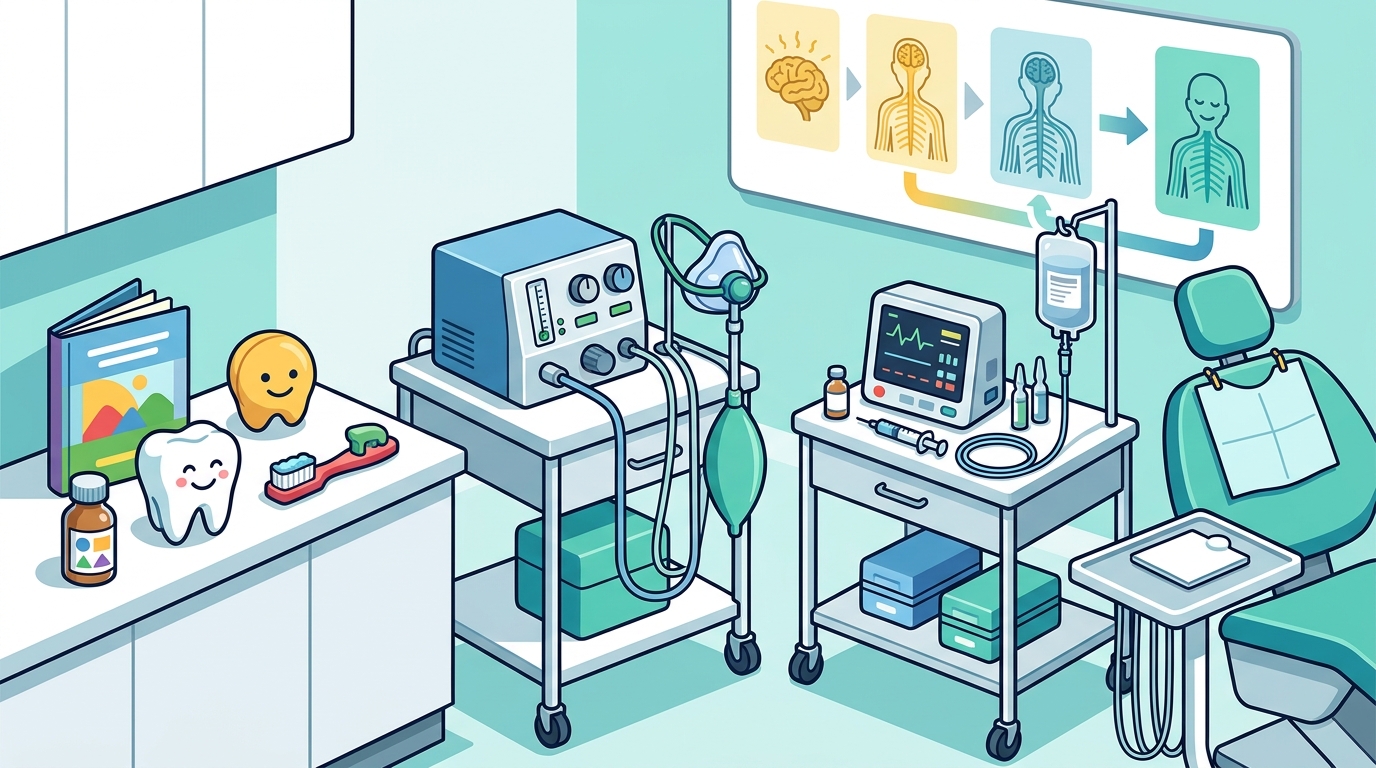
Comparison of Anxiety Reduction Methods
| Method | Level of Consciousness | Onset/Offset Speed | Best For | Recovery Time |
|---|---|---|---|---|
| Behavioral Techniques | Fully Awake | Immediate | Mild anxiety, first visits | None |
| Nitrous Oxide | Awake and Relaxed | Minutes | Moderate anxiety, short procedures | Immediate |
| Oral/IV Sedation | Drowsy to Unresponsive | 30-60 mins | Severe anxiety, multiple procedures | Several hours |
| General Anesthesia | Unconscious | Varies | Special needs, extensive treatment | 1-2 days |
Choosing the Right Method for Your Child
Choose behavioral techniques if your child is generally cooperative but feels nervous about new environments. This approach builds confidence and is the safest option for routine care. Choose nitrous oxide if your child needs to stay still for a filling or cleaning but can still follow instructions. Choose oral or IV sedation if your child has significant fear or requires several procedures at once. Choose general anesthesia if your child has special health care needs or extensive dental issues that cannot be managed with lighter sedation. The right choice is always determined after an in-person evaluation by a qualified pediatric dentist.
Frequently Asked Questions
Is nitrous oxide safe for young children?
Yes, nitrous oxide is widely considered safe for children when administered by a trained professional. It is a mild sedative that allows the child to remain awake and responsive. The effects wear off quickly, and most children can return to normal activities shortly after the appointment.
Can I switch from one sedation method to another?
Yes, the sedation plan can be adjusted based on your child's response and clinical needs. If a lighter method is not effective, the dentist may recommend a deeper level of sedation. This decision is made on a case-by-case basis after careful evaluation.
Do I need to fast my child before sedation?
Fasting requirements depend on the type of sedation. For oral or IV sedation, specific fasting instructions are usually provided to prevent nausea. For general anesthesia, strict fasting guidelines are required. Always follow the pre-procedure instructions given by your dental team.
Is general anesthesia only for children with special needs?
No, general anesthesia is not limited to children with special needs. It may also be recommended for children with severe dental anxiety, extensive decay, or those who require multiple procedures in a single visit. The decision is based on the child's overall health and treatment needs.
How do I know which method is right for my child?
The best way to determine the right method is to consult with a pediatric dentist. During the initial evaluation, the dentist will assess your child's anxiety level, medical history, and treatment needs. This individualized approach ensures the safest and most effective care.
Next Steps for Your Family
Every child is unique, and the right anxiety reduction method depends on their specific comfort level and clinical needs. Smileland Pediatric Dentistry is dedicated to providing compassionate, individualized care for children of all ages. Our team is experienced in managing dental anxiety and can help you find the best approach for your child. To schedule an evaluation or learn more about our sedation options, please contact our office. We are here to help your child feel comfortable and confident in the dental chair.